The Adventists are the only body of Christians with the Bible as their teacher, who can find no warrant in its pages for the change of day from the seventh to the first… Reason and common sense demand the acceptance of one or the other of these alternatives: either Protestantism and the keeping holy of Saturday, or Catholicity and the keeping holy of Sunday. Compromise is impossible.
— Catholic Mirror, September 2 and December 23, 1893 (at the time the official organ of Cardinal Gibbons)
This is Part 2 of a two-part series. If you haven’t read Part 1, start there, because we build on it here. Part 1 identified the beast. This part asks the bigger question: what is his mark, and how did a pagan day end up at the center of it?
A word on tone. This is a study of history and prophecy, not an attack on people. Many sincere Christians keep Sunday because that is what they were taught, and we will come back to that. All Scripture quotations are from the New King James Version (NKJV).
Protestantism and the Five Solas
Protestantism emerged in the early sixteenth century. It is not a single institution but a family of churches united by two things: a break from papal supremacy, and a commitment to a handful of foundational principles.
Where the name comes from. At the Diet of Speyer in 1526, German princes and free cities were allowed to manage religious matters in their own territories. In 1529 the emperor Charles V, represented by his brother Archduke Ferdinand, reversed that and ordered the Catholic faith and the authority of Catholic bishops restored everywhere. On April 19, 1529, a minority of reform-minded rulers presented a formal protest (protestatio), arguing that a majority vote could not bind their consciences in matters touching God’s honor and the salvation of their souls. The signers included Elector John the Steadfast of Saxony, Landgrave Philip of Hesse, Margrave George of Brandenburg, Dukes Ernest and Francis of Braunschweig-Lüneburg, Prince Wolfgang of Anhalt, and representatives of fourteen free imperial cities, including Strasbourg and St. Gall. Their opponents labeled them “Protestants,” and the word stuck for the whole Reformation movement.
The movement rests on five principles, known as the five solas:
Sola Scriptura (Scripture alone). The Bible is the final authority for faith and practice. Creeds and church officers are useful, but they stand under Scripture and are judged by it. “All Scripture is given by inspiration of God, and is profitable for doctrine, for reproof, for correction, for instruction in righteousness, that the man of God may be complete, thoroughly equipped for every good work” (2 Timothy 3:16–17). This principle drove Bible translation into everyday languages, so ordinary people could test church teaching for themselves.
Sola Fide (faith alone). Sinners are declared righteous through faith in Christ and His finished work: “Therefore we conclude that a man is justified by faith apart from the deeds of the law” (Romans 3:28). Christ’s righteousness is credited to the believer. Good works are the fruit of salvation, not its root. Faith does not cancel God’s law either: “Do we then make void the law through faith? Certainly not! On the contrary, we establish the law” (Romans 3:31).
Sola Gratia (grace alone). Salvation is an unearned gift: “For by grace you have been saved through faith, and that not of yourselves; it is the gift of God, not of works, lest anyone should boast” (Ephesians 2:8–9). Fallen humanity cannot save itself. The Holy Spirit draws and empowers us, and we are free to accept or resist that call.
Solus Christus (Christ alone). “For there is one God and one Mediator between God and men, the Man Christ Jesus” (1 Timothy 2:5). Christ alone is our Prophet, Priest, and King, so no human priest, intercessor, or saint stands between us and God. This is the “priesthood of all believers”: “But you are a chosen generation, a royal priesthood, a holy nation, His own special people” (1 Peter 2:9).
Soli Deo Gloria (glory to God alone). Because salvation is God’s work from start to finish, all praise belongs to Him: “Therefore, whether you eat or drink, or whatever you do, do all to the glory of God” (1 Corinthians 10:31).
Hold those five principles in mind, especially Scripture alone. They are the measuring stick for everything that follows.
The Venerable Day of the Sun, Disguised as the Lord’s Day
The week has had seven days since creation:
And on the seventh day God ended His work which He had done, and He rested on the seventh day from all His work which He had done. Then God blessed the seventh day and sanctified it.
(Genesis 2:2–3)
The Bible says the seventh day “is the Sabbath of the LORD your God” (Exodus 20:10). Yet most of the Christian world keeps the first day. Why?
The Planetary Week
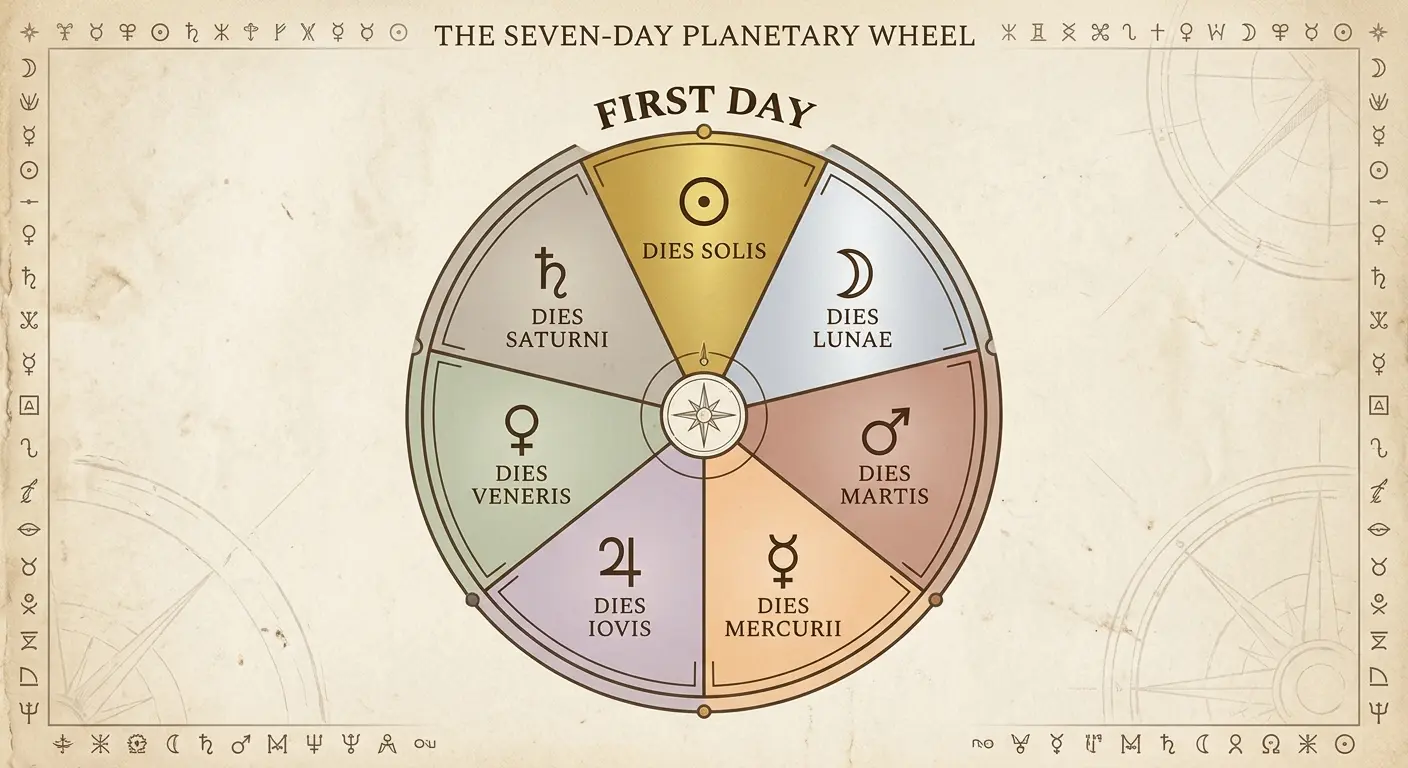
In biblical times the days were simply called the first day, the second day, and so on. Around the time of Christ, non-Christians began renaming them after the heavenly bodies, the “planetary week,” with each day assigned to a different god. The most important god, the Sun, was given the first day, on the reasoning that the first is always the most important. His was “the Venerable Day of the Sun” (dies Solis), and the week’s worship centered on it.
The names were new, but sun worship was ancient. Fausset’s Bible Dictionary calls it the earliest idolatry. Scripture records it throughout:
Job 31:26–27 mentions heart-deep devotion to the sun and moon; Egypt had Ra, with On (Heliopolis) as its center of sun worship (see Jeremiah 43:13).
Entering Canaan, the Israelites met the sun-linked gods of the nations around them: Baal, Molech, and Hadad.
Israel itself fell into the practice (Leviticus 26:30; Isaiah 17:8). King Manasseh practiced it (2 Kings 21:3, 5), Josiah later removed “the horses that the kings of Judah had dedicated to the sun” and burned its chariots (2 Kings 23:5, 11–12), and housetop altars burned incense to the sun (Zephaniah 1:5).
Ezekiel was shown the “greatest abomination”: men at the temple door with their backs to God’s house, “worshiping the sun toward the east” (Ezekiel 8:16–17).
Throughout this time no particular day was set aside for this worship. That changed around Christ’s time, when days were dedicated to specific gods. So there were two memorials side by side. The Sabbath, the only Sabbath in the Bible, is the memorial of creation and belongs to the seventh day. The sun day was the memorial of the sun god and belonged to the first.
Mithraism
By the time of Christ, sun worship was most powerfully expressed in Mithraism. Mithra began as an Iranian god of strength and war, but by the first century he had become the leading sun god of the Roman world, often called Sol Invictus, “the Invincible Sun.” In the early Christian centuries he was Christianity’s greatest pagan rival.
This was no accident. It is part of Satan’s strategy to counterfeit the true religion: Mithraism offered a dying and rising savior, sacred meals, initiation rites, and a special holy day out of the seven, Sunday. Mithra was especially popular among Roman soldiers, and large numbers of non-Christians began observing Sunday in his honor. The emperor Aurelian (270–275), whose mother was a priestess of the Sun, made the solar cult the empire’s official religion. His biographer, Flavius Vopiscus, records that the priests of the Temple of the Sun in Rome were called pontiffs.
By the middle of the second century, according to the records from Alexandria and Rome in particular, worldly Christians began keeping Sunday to fit in with their pagan neighbors. Since there was no Scripture for it, they called it “the Lord’s Day,” even though Revelation 1:10 (“I was in the Spirit on the Lord’s Day”) never names Sunday. In Scripture, the Lord’s day is the day the Lord claims as His own: “the Son of Man is also Lord of the Sabbath” (Mark 2:28), and “the Sabbath a delight, the holy day of the LORD” (Isaiah 58:13). Then the idea bounced back: Mithra’s followers began calling their Sunday “the Day of the Lord” and their god “Lord.” Aurelian’s coinage carried the title Sol Dominus Imperii Romani, “the Sun, Lord of the Roman Empire.” Sun worship remained the official religion until Constantine defeated his rival Licinius in 324, after which it was replaced by Romanized Christianity.
A useful pattern: most of the “new things” that entered the church in these centuries came through Alexandria or Rome and spread outward. The eastern churches, farther from Rome, stayed closer to the apostles’ teaching for longer.
Sunday and the Early Church (A.D. 50–300)
It may seem surprising that any Christians before Constantine would keep Sunday instead of the seventh-day Sabbath God commanded. The timeline explains it. Christ was crucified in A.D. 31. Most of the disciples were gone by A.D. 65. John, the last apostle, died just before A.D. 100. By A.D. 200 pagan compromise was entering the church in earnest, and by 250 it was a flood. Persecution would occasionally purify the church, but as soon as peace returned, the world returned with it. The safety of God’s people then is our only safety now: the Word of God, nothing less, nothing more, nothing else.
Here is what came in, mostly through Alexandria and Rome.
December 25
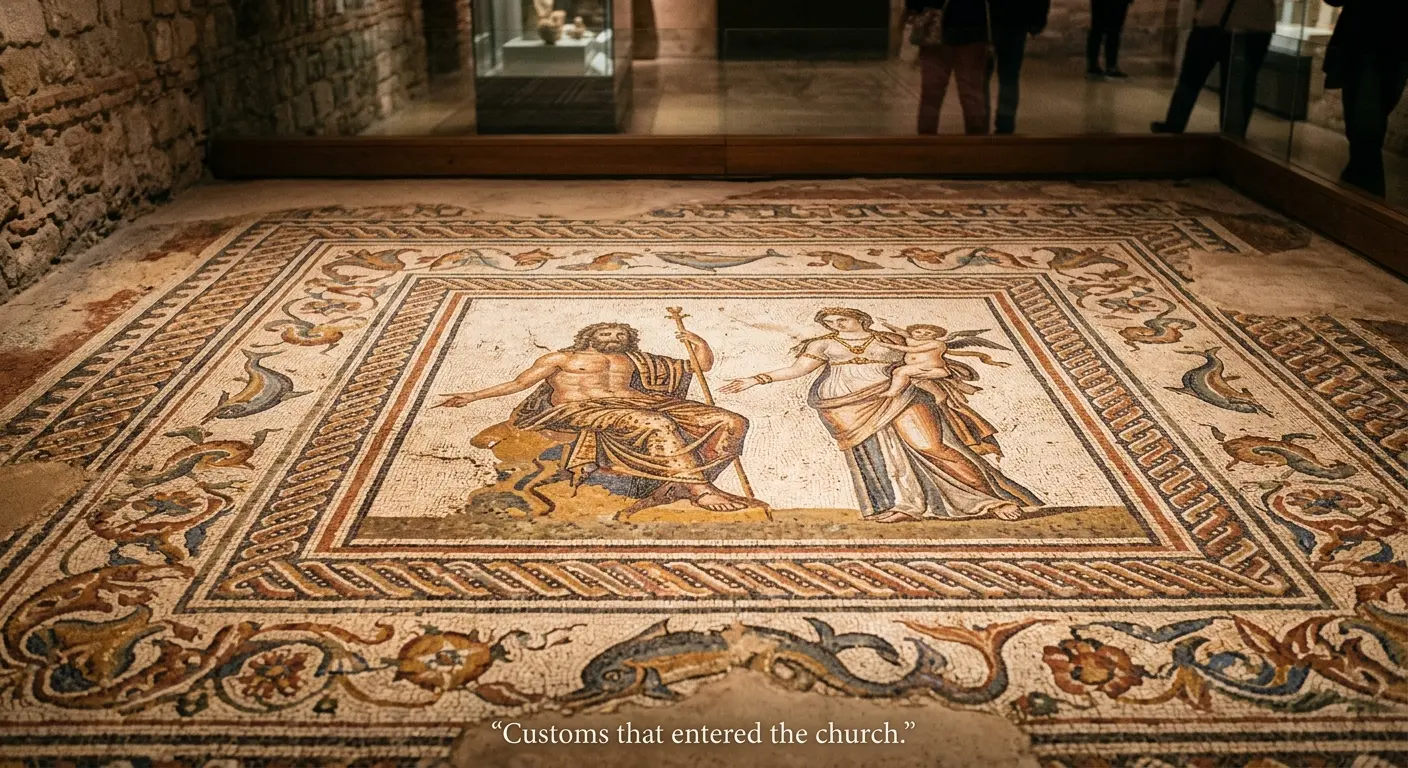
Historians such as Franz Cumont and Olcott connect December 25 with the annual birth of the sun, celebrated just after the winter solstice, when the sun begins to rise higher again. The emperor Aurelian made it an official holiday about A.D. 273. Not long afterward the Roman church began celebrating the same date as Christ’s birth, a custom that came into the church from the local church at Rome, which received it from paganism. The church historian Williston Walker notes that December 25 was the pagan festival of Sol Invictus, and that identifying Christ with the Sun god became widespread in the fourth century, helped along by Constantine’s Sunday legislation (A History of the Christian Church, 3rd ed., p. 155).
Tonsure and Holy Water
Pagan priests shaved a circular patch on their heads in honor of the solar disc, and Christian leaders in Alexandria and Rome copied the style (the tonsure), which some monastic orders still use. God’s instruction to His people was the opposite: “You are the children of the LORD your God; you shall not cut yourselves nor shave the front of your head for the dead” (Deuteronomy 14:1; see also Leviticus 21:5). About this time “holy water” also appeared, and baptism by immersion drifted into mere sprinkling, even though the Bible describes burial: “Therefore we were buried with Him through baptism into death” (Romans 6:4; see also Acts 8:35–38).
The Queen of Heaven
Much of later Roman Catholic liturgy was shaped when the churches of Alexandria and Rome copied the Egyptian worship of Isis, the “Queen of Heaven.” God’s people had been warned about exactly this (Jeremiah 7:18; 44:17–19, 25). The historian Samuel Dill describes the daily ritual of Isis as regular and complex as that of the Catholic Church: robed, tonsured priests, a morning litany and sacrifice, the holy image shown for adoration, and holy water sprinkled from a sacred spring (Roman Society from Nero to Marcus Aurelius, 1904, pp. 577–578). The commandment stands: “You shall have no other gods before Me” (Exodus 20:3).
The Mother and Child
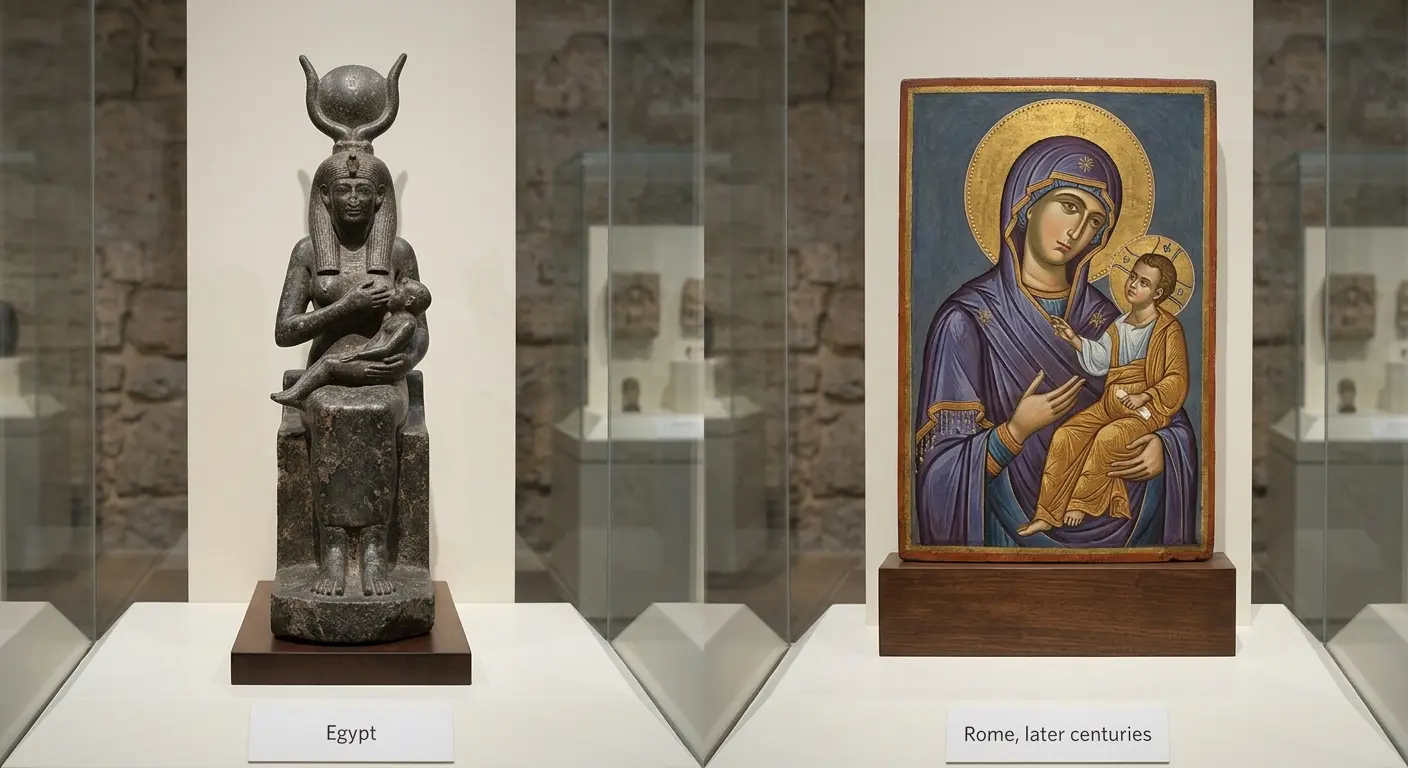
The title “Queen of Heaven, Mother of God” entered the Christian church through the church at Rome in the fourth century, pushed by Egyptian church leaders who declared Mary “the Mother of God.” It split the church and led to the banishment of Nestorius, who opposed it. Statues of Isis nursing Horus were already accepted across the empire. Then, in the fifth century, the names Isis and Horus disappeared, and the worship of “the Virgin Mary and her Child” appeared in their place. Jesus Himself kept the focus elsewhere: “For whoever does the will of God is My brother and My sister and My mother” (Mark 3:35; see also Luke 11:27–28; Matthew 10:37).
Mithra, tellingly, vanished within a century once the essential parts of Mithraism were inside the church. Satan no longer needed the cult once he had its day and its practices in the church.
Hermits, Beads, and Candles
From India came ascetics, monastic hermits, and rosary beads. The burning of candles came from the worship of Mithra, whose flame was seen as a small sun. These arrived as the church, led by the theological school at Alexandria and the bishop of Rome, opened its doors to paganism, and Sunday observance came in with them.
Easter
The apostolic church kept the biblical Passover (Pascha), not Easter. Easter came in as a spring festival modeled on pagan fertility festivals such as that of Attis, which Emperor Claudius made an official holiday. Cumont describes the celebrations as wild merrymaking and luxurious banquets (Oriental Religions in Roman Paganism, 1907, pp. 56–57). The church gradually folded the festival into the resurrection of Christ. It was a deliberate move of the bishop of Rome that brought it in, the intention being to attract heathens into the church.
The First Sunday Coercion
In A.D. 195 the Roman church made headlines in all of Christendom. Victor, bishop of Rome, tried to force the eastern churches to celebrate Christ’s resurrection on a Sunday. The eastern bishops protested that the biblical precedent was the fourteenth day of Nisan: “On the fourteenth day of the first month at twilight is the LORD’s Passover” (Leviticus 23:5; see Exodus 12). Victor wrote letters excommunicating every leader and church that would not comply and declared the churches of Asia apostate.
Up to then, some churches were more influential than others, but none was “over” the others. Dr. Bower, in his History of the Popes (vol. 1, p. 18), called Victor’s move “the first essay of papal usurpation.” It was probably the first attempt by the bishop of Rome to control all the churches, and historians trace a pattern in which the Roman bishop increasingly used Sunday as a tool for supremacy. Victor’s decree was the first ecclesiastical Sunday law of any kind. The Easter controversy continued until the Council of Nicaea in 325, which declared Sunday the official day for Easter. Constantine followed immediately with civil enactments to enforce it.
How Sunday Keeping Took Hold
All this time the influence of sun worship was growing. Emperor worship was fading, and two strong contenders were left: Mithra and Christ. By the end of the third century, in some cities of Egypt and the West, it was hard to see much difference. Cumont says some in the church deliberately compared Christ with Mithra to draw pagans in, and exalted the sun’s disc as a symbol of Christ, which is where the radiant halos on Christ, Mary, and the saints come from. God had warned: “lest you lift your eyes to heaven, and when you see the sun, the moon, and the stars… you feel driven to worship them” (Deuteronomy 4:19). Tertullian, living west of Alexandria, tells us that he and fellow Christians of his time regularly faced the east when they prayed to Christ their God. He mentions this in an essay in which he advocates Sunday-keeping, and rebukes other Christians because they were refraining from work on the Seventh day. In the rural areas, there were still “seven thousand who have not bowed the knee to Baal” (Romans 11:4).
Constantine and the State Church (A.D. 300–350)
When Diocletian retired in 305, several men fought for the throne until Constantine emerged as sole ruler. After his decisive battle outside Rome in October 312, the Edict of Milan (313) gave Christianity full legal equality, and more favors followed.
Then, on March 7, 321, came the first national Sunday law in history, the first “blue law.” In substance, it ordered judges, townspeople, and tradesmen to rest on “the venerable day of the Sun,” while farmers in rural districts were free to work the fields, so as not to lose the benefit of favorable weather (The Code of Justinian, book 3, title 12, law 3). Constantine issued five more Sunday laws within a few years.
Did Constantine make this law as a consistent Christian? Hardly. At the time he was embellishing the Temple of the Sun in Rome. The next day, he issued a decree favoring pagan soothsayers, and he legalized the old Roman priests’ practice of reading the flight of birds and the entrails of animals. His Sunday law never mentions Christ, Christianity, the Sabbath, or the resurrection. It calls the day by its pagan name, venerabili die solis, and he was still a worshiper of Sol Invictus and Pontifex Maximus (supreme pagan priest). In another Sunday law, he ordered his heathen troops to march out each Sunday and recite a prayer he had written, one that any worshiper of Mithra, Serapis, or Apollo could pray as easily as a Christian, facing the sun. The French historian Victor Duruy notes this gave official sanction to the old custom of praying to the rising sun (History of Rome, vol. 7, p. 489). The historian Philip Schaff observes that the law named the day dies Solis rather than the Sabbath or the Lord’s day. After defeating Licinius, Constantine openly professed Christianity, but he postponed baptism until days before his death in 337.
Constantine meant the law to unite all religions into one compromising mass. The church leaders of his time, however, saw it as a great victory.
Eusebius and Nicaea
Eusebius of Caesarea (270–338), generally regarded as Constantine’s most prominent flatterer in the church, wrote that everything proper to do on the Sabbath the church had transferred to the Lord’s day (Commentary on the Psalms, in Migne, Patrologia Graeca, vol. 23, col. 1171).
Commenting on this heaven-daring statement, one historical writer says this:
Not a single testimony of the Scriptures was produced in proof of the new doctrine. Eusebius himself unwittingly acknowledges its falsity, and points to the real authors of the change. 'All things,' he says, 'whatever that it was duty to do on the Sabbath, these we have transferred to the Lord's day.' But the Sunday argument, groundless as it was, served to embolden men in trampling upon the Sabbath of the Lord. All who desired to be honored by the world accepted the popular festival.
--E.G. White, The Great Controversy, page 574
In 325 the Council of Nicaea decreed that Christ’s resurrection be honored by keeping Easter on a certain Sunday each year. Constantine immediately issued an imperial order commanding all Christians to obey. Church and state had united, and wherever that has happened in history, persecution of dissenters has generally followed. Trouble was ahead for the people of God.
Persecution of God’s People Begins (A.D. 350–700)
To placate church and state, some tried to keep both days. The church historian Sozomen notes that many were “assembling together on the Sabbath as well as on the first day of the week,” a custom never observed at Rome or Alexandria (Ecclesiastical History, book 7, chapter 19). It sounds like a practical compromise, but it wasn’t one. The seventh-day Sabbath is God’s ordained day of worship for the Creator. Sunday was a man-made day honoring a pagan god. “No one can serve two masters” (Matthew 6:24; see also Luke 16:13; Acts 5:29; Galatians 1:10).
This was the dilemma of the three Hebrews in Daniel 3. They were not banned from worshiping God. They only had to bow with everyone else in a show of worship to a false god, and they refused: “But if not, let it be known to you, O king, that we do not serve your gods, nor will we worship the gold image which you have set up” (Daniel 3:18). Faithful Sabbath-keepers faced the same choice.
By the later fourth century, church leaders were unhappy that some were keeping both days. Their authority would not be seen as supreme while both were kept. So at the Council of Laodicea, Bible Sabbath-keeping was forbidden for the first time by official church decree. (The date is uncertain. Some sources give A.D. 336, while most historians place it in the 360s.) Canon 29 instructs Christians not to “Judaize” by resting on the Sabbath, to work on that day instead, to honor the Lord’s day, and to rest then if they can. Those who refused were to be anathema, cut off from Christ and from fellow believers. (C. J. Hefele, A History of the Councils of the Church, vol. 2, p. 316.)
“Judaizing” was a label that covered the real issue. Christians who kept the seventh-day Sabbath weren’t obeying the Jews. They were obeying God. They weren’t Judaizing; they were Bible-izing. The Roman Catholic priest Vincent J. Kelly confirms the order of events: the Council of Laodicea issued the first church legislation about Sunday, and Constantine issued the first civil legislation (Forbidden Sunday and Feast-Day Occupations, p. 203). From Laodicea on, the suppression of Sabbath-keeping lay at the heart of the persecution of God’s people.
More Decrees, Each Stricter
More laws followed. Governments issued decrees in A.D. 365, 386, 389, 458, 460, 554, 589, 681, 768, 789 and onward, and church councils did the same in 343, 538, 578, 581, 690 and onward. Each was harsher than the last. In every case, human law suppressed what God had expressly commanded and exalted a day for which He made no provision. Jesus described the pattern: “All too well you reject the commandment of God, that you may keep your tradition” (Mark 7:9).
The Sabbath in A.D. 425
Despite all this, the seventh-day Sabbath continued to be kept by most Christians for a long time. Some claim most had switched to Sunday within two or three centuries of Christ. That isn’t true. By the mid-fourth century, many city Christians were compromising under combined church and state pressure, but those outside the cities held out much longer.
Augustine, bishop of Hippo (died A.D. 430), was himself a Sunday-keeper. Yet in a letter to Jerome he acknowledged that the seventh-day Sabbath was observed “in the greater part of the Christian world,” and he urged that those who kept it not be persecuted. The church historian Socrates (died about A.D. 440), writing nearly a century after Constantine’s Sunday law, reported that almost all churches throughout the world celebrated the sacred mysteries on the Sabbath every week, but that the Christians of Alexandria and Rome had stopped, “on account of some ancient tradition” (Ecclesiastical History, book 5, chapter 22).
People cannot “cease” what they never did, so even Rome and Alexandria once kept the Sabbath. Four hundred years after Christ, and a century after Constantine’s law, these two cities were the only places where most Christians kept Sunday instead.
The Church in the Dark Ages (A.D. 700–1500)

Over the centuries, Sunday observance became a symbol of Roman religious power, and dissenters were severely punished. Even so, Sabbath-keepers survived in distant or isolated places. It was kept in Britain, Scotland, and Ireland long after it had been crushed in much of the West, and missionaries from the school on the isle of Iona carried the faith to northern Europe and Switzerland before those churches were eventually taken over by Rome. Among the Waldenses of the Italian Piedmont and Swiss Alps, among the most hunted people of the Dark Ages, many kept the Bible Sabbath. Sabbath-keeping churches also survived for centuries in Central Africa, Ethiopia, and among the Armenians and Syrians. (Sources include Heylyn, History of the Sabbath; D’Aubigné, History of the Reformation; Hoveden, Annals; and Geddes, Church History of Ethiopia.)
The pattern is simple: Christians who lived far from Rome and had the Bible in their own language were the ones most likely to keep the true Sabbath. When the northern tribes invaded the empire, most accepted the Roman version of Christianity and, at the pope’s request, forbade Sunday work by civil decree. Yet the medieval church never confused Sunday with the Sabbath. It admitted Sunday was not the Bible Sabbath, and Christians did not call Sunday “the sabbath” until modern times. Sunday rest proved hard to enforce, so tales of letters from heaven and miraculous punishments were added to church and civil decrees. The sixth-century bishop Gregory of Tours filled a book with them.
Look at the company Sunday has kept: born of tradition, introduced by Gnostic philosophers, popularized by sun worship, enforced by law, sanctified by superstition, and eventually upheld by the death sentence. All of these props were needed because there is not one passage of Scripture that authorizes it.
What the Catholic Church Says About Sunday
The church that made the change has been candid about it. You can verify these statements in the original sources:
John Gilmary Shea (Catholic historian, 1883): Protestantism, having discarded the authority of the church, has no good reason for its Sunday theory and should logically keep Saturday (American Catholic Quarterly Review, January 1883, p. 152).
Stephen Keenan, A Doctrinal Catechism (1846 ed., p. 176): the church could not have substituted Sunday for Saturday without the authority it claims, “a change for which there is no Scriptural authority.”
Priest Brady (Elizabeth, N.J., March 17, 1903): Presbyterians, Baptists, Methodists, and others should be reminded that the Bible does not support their Sunday observance; Sunday is an institution of the Catholic Church.
The Christian Sabbath (published by the Catholic Mirror, Baltimore, 1893, pp. 29–31): the Catholic Church changed the day from Saturday to Sunday more than a thousand years before there was a Protestant, and Protestants who keep Sunday are following her teaching, not the Bible.
Many assume Sunday is observed because Jesus rose on that day. Catholic teaching says otherwise: Catholics keep Sunday because the church changed the day. They believe the church is infallible and has the power, through the pope as Christ’s Vicar, to make that change. They hold this sincerely, but, as Part 1 showed, Scripture gives the church no such power.
Using the resurrection as the reason is no different from arguing that Thursday should be a day of worship because Jesus ascended on a Thursday. Nobody keeps Thursday. There is nothing wrong with celebrating the resurrection, but there is everything wrong with substituting it for the Sabbath. The commandment is express: “Remember the Sabbath day, to keep it holy” (Exodus 20:8). Jesus never told anyone to replace it with the day of His resurrection, and neither did His disciples. As the Bible foretold, most of the world now follows a commandment of the Catholic Church: “All who dwell on the earth will worship him, whose names have not been written in the Book of Life of the Lamb slain from the foundation of the world” (Revelation 13:8).
What the Mark of the Beast Is Really About
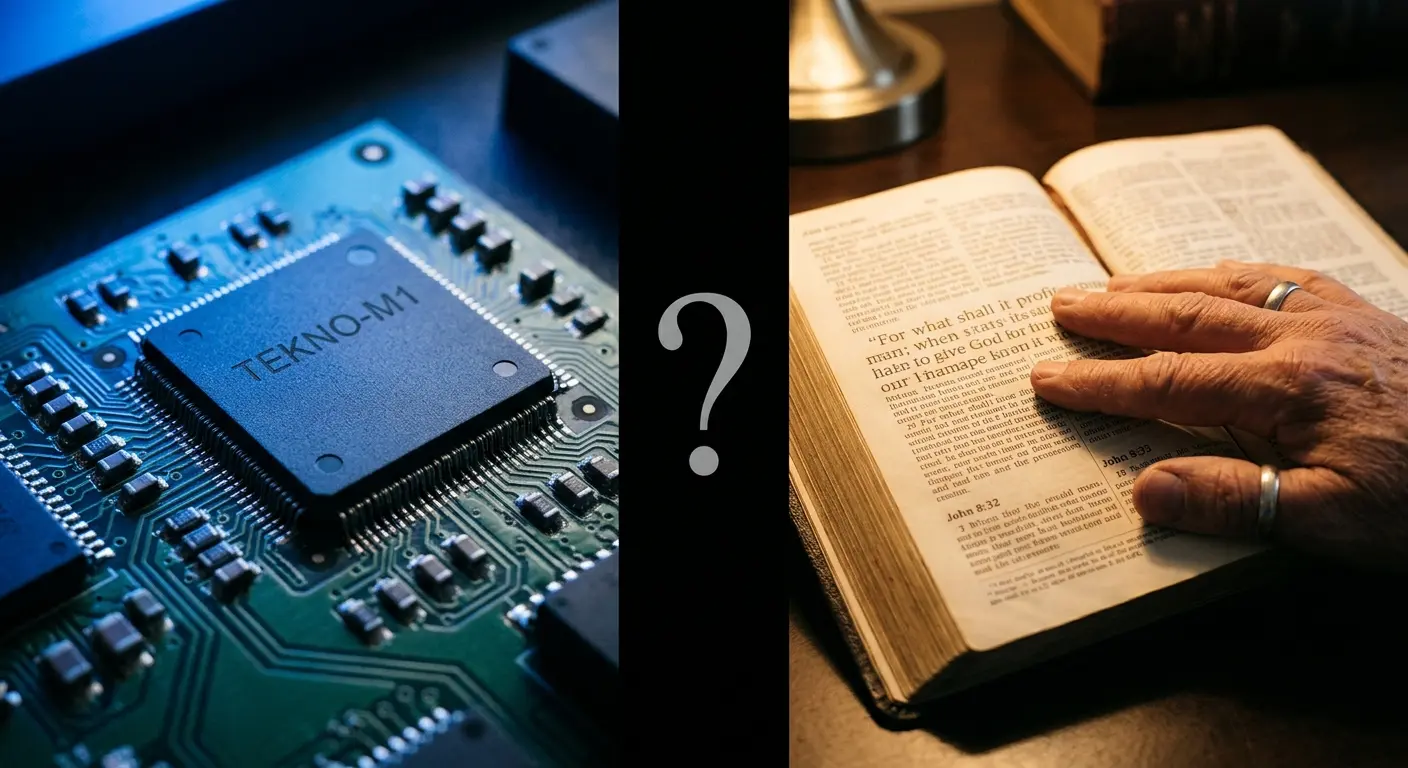
There is no shortage of theories about the mark of the beast. Here are the main ones:
Literal mark: a brand, tattoo, or chip on the right hand or forehead (RFID, barcodes, biometrics).
Economic system: the “buy or sell” requirement, linked to digital IDs, cashless payment, or digital currencies.
Technology: microchips, QR codes, AI, and other tools of total economic control.
Allegiance: the hand stands for actions and the forehead for thoughts, so the mark is a mindset and lifestyle devoted to the beast, the opposite of God’s “seal” (Revelation 7:3).
Idolatry: any system or power that demands the worship that belongs to God.
First-century Rome: 666 as a code for Nero Caesar, with the mark as certificates of emperor worship or Roman coinage bearing Caesar’s image.
Future antichrist system: a coming world leader or one-world government requiring a mark for commerce.
Gematria code: 666 as a symbolic number for imperfection, since seven symbolizes completeness.
Church traditions: Catholic and Orthodox readings often take it symbolically as sin and separation from God; Luther and the Reformers tied it to the papacy; Jehovah’s Witnesses read it as support for political powers.
Some even applied the prophecy to COVID-19, the masks or the vaccines, because people were not allowed into certain places without them, and they saw “no one may buy or sell except one who has the mark” (Revelation 13:17).
Instead of picking a theory, let’s read what the Bible itself says. Eight passages speak of the mark, and see what they share:
“So they worshiped the dragon who gave authority to the beast; and they worshiped the beast” (Revelation 13:4).
“All who dwell on the earth will worship him” (Revelation 13:8).
The second beast “causes the earth and those who dwell in it to worship the first beast, whose deadly wound was healed” (Revelation 13:12).
It causes “as many as would not worship the image of the beast to be killed” (Revelation 13:15).
“If anyone worships the beast and his image, and receives his mark on his forehead or on his hand” (Revelation 14:9).
“They have no rest day or night, who worship the beast and his image, and whoever receives the mark of his name” (Revelation 14:11).
“A foul and loathsome sore came upon the men who had the mark of the beast and those who worshiped his image” (Revelation 16:2).
The beast and false prophet deceived “those who received the mark of the beast and those who worshiped his image” (Revelation 19:20).
Every passage ties the mark to worship, which is why technology theories fall short. They are speculation. The mark is about God’s people turning to worship the beast and his image instead of God. A literal tattoo or brand would also trivialize the issue, and it would make God cruel for punishing people over a mere skin mark, which is exactly the picture of God the devil has tried for ages to paint. Spiritualizing it into “general separation from God” is not enough either, because the Bible gives specific details.
We already know who the beast is from Part 1. According to Revelation 13:4, people worship both the dragon and the beast. The dragon is the devil (Revelation 12:9), who infiltrated the church and set up his throne in the papacy. He receives worship through a false system of religion in which tradition outranks Scripture. God is merciful toward those who do not know better: “Truly, these times of ignorance God overlooked, but now commands all men everywhere to repent” (Acts 17:30).
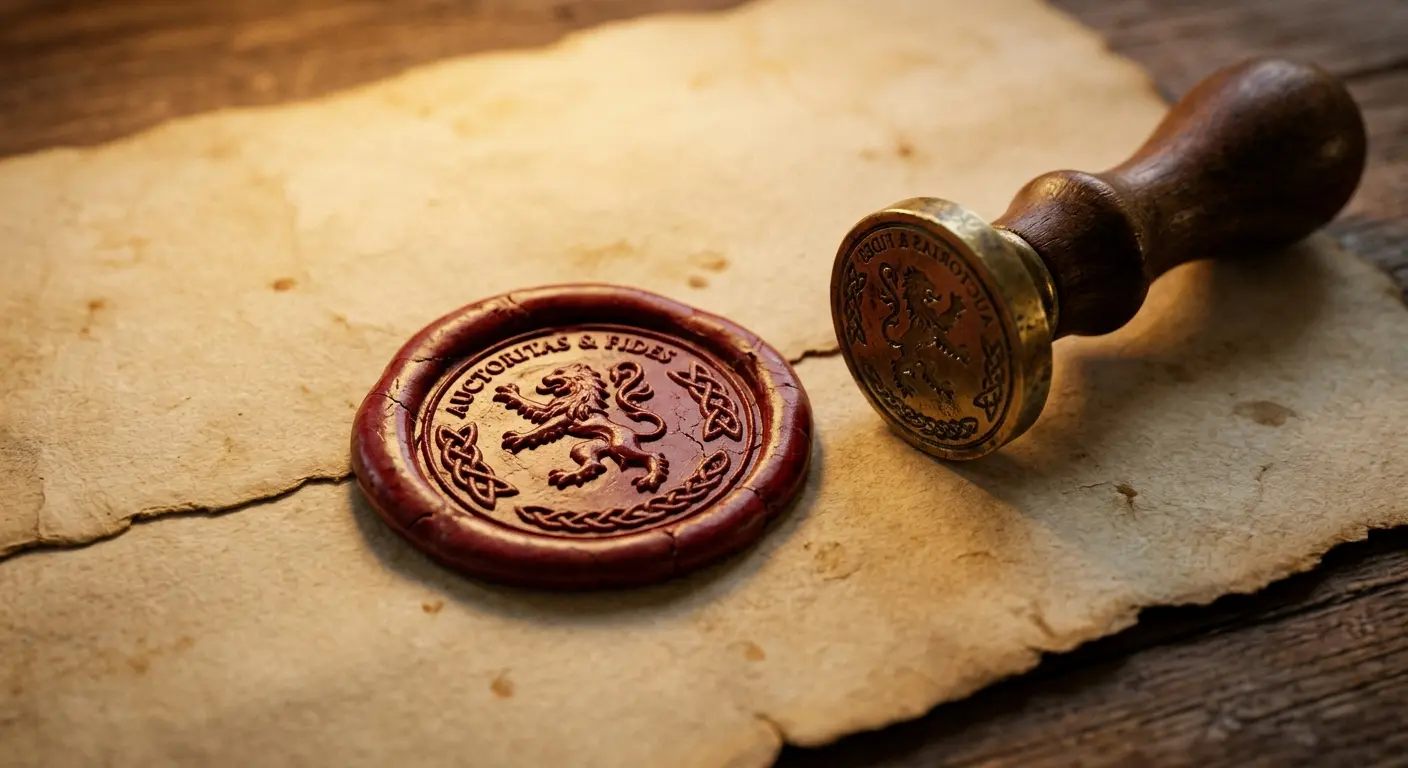
In the ancient world, servants bore the mark of their masters, soldiers the mark of their general, and devotees the mark of their god, usually on the right hand or forehead (Dissertations on the Prophecies, vol. 3, p. 241). The Bible uses the same language, not to describe a literal mark, but to describe loyalty. God asks for worship as Creator: “Fear God and give glory to Him, for the hour of His judgment has come; and worship Him who made heaven and earth, the sea and springs of water” (Revelation 14:7). And the Sabbath is the sign of that relationship: “Hallow My Sabbaths, and they will be a sign between Me and you, that you may know that I am the LORD your God” (Ezekiel 20:20). He has the authority to command worship on the seventh day because He is Creator and set it apart as a memorial of creation (Genesis 2:2–3).
Now notice what the Catholic Church claims about itself. The Catholic priest Thomas Enright, in an 1884 lecture reported in the Hartford Kansas Weekly Call and later cited in the American Sentinel (1893), is said to have declared that the Bible commands the Sabbath, that the Catholic Church says otherwise by its own authority, and that the civilized world obeys. Whatever the quote’s wording, the point matches the statements above. The church claims authority to command worship on a certain day, and Sunday is the sign of that authority, just as the Sabbath is the sign of God’s. The Bible predicted it: “All the world marveled and followed the beast” (Revelation 13:3).
Sealed or Marked: There Is No Middle Ground
Go back to the Catholic Mirror quote that opened this post. The key phrase is “Compromise is impossible.”
Let me be clear first: Sunday is not yet the mark of the beast. Those who have kept Sunday, and those who keep it today, do not have the mark. The early reformers all kept Sunday, and they lived by the light they had. There are sincere, good Christians who keep it today simply because they were taught to, and that is why God “overlooks” times of ignorance.
But a time will come when Sunday is enforced by the image of the beast, a power or nation that forces religion on people. The image of the beast compels people to show allegiance to the first beast, the papacy, and the way to show it will be Sunday observance. At that point every living person will have a decision to make: receive God’s seal (the Sabbath) or the mark of the beast (Sunday worship). Everyone will have heard this truth and will know what the Catholic Church did, how Sunday came about, and what it stands for. Some will reject the truth and keep believing in Sunday; they receive the mark on the forehead. Others will believe the truth but choose Sunday anyway for the sake of convenience, such as keeping a job; they receive it on the hand. Standing firm on the other side will be God’s remnant, who “keep the commandments of God and have the testimony of Jesus Christ” (Revelation 12:17; see also 14:12; 22:14).
The Image of the Beast
Revelation introduces a second beast: “Then I saw another beast coming up out of the earth, and he had two horns like a lamb and spoke like a dragon” (Revelation 13:11). It “deceives those who dwell on the earth by those signs which he was granted to do in the sight of the beast, telling those who dwell on the earth to make an image to the beast who was wounded by the sword and lived” (Revelation 13:14). Its features are:
It comes up out of the earth.
It has two horns.
It is lamb-like.
It exercises the first beast’s power.
It makes an image to the first beast.
It rises around the time the first beast receives its deadly wound.
The first beast rose from the sea, which symbolizes “peoples, multitudes, nations, and tongues” (Revelation 17:15; see 13:1). The earth, by contrast, suggests new, previously unoccupied territory. The lamb-like look suggests infancy and innocence, and the two horns point to the principles on which its power rests. And it rises around 1798, the year of the first beast’s deadly wound (see Part 1).
Only one nation fits: the United States of America. It was the fastest-growing nation around 1798, established on unoccupied territory, with civil and religious liberty as the two guiding principles of its government. It is introduced in the prophecy in its peaceful state, already independent, and modern Spiritualism began there, in line with the “signs” the beast performs. Remember the pattern from Part 1: every beast in prophecy has to do with God’s people. Babylon held them captive, Medo-Persia ruled over them, Greece and pagan Rome came next (Rome crucified Jesus and persecuted the early church), and papal Rome followed. When the pope was imprisoned in 1798, a new beast appears, and America’s religious liberty made it possible for Protestantism to flourish and spread.
But Scripture predicts that this lamb-like beast, Protestant America, will make “an image to the beast.” An image is a reflection of the real thing, so if we know what the papacy is like, we know what its image will be. Papal supremacy was marked by religious intolerance that came from combining church and state, and history shows that persecution of minorities inevitably follows.
The prophecy points to a time when American Protestants unite and form a state-church alliance that betrays the nation’s own foundational principle of religious liberty. It need not be one universal church, since Protestants differ too much for that. But there are two beliefs on which they will unite: Sunday worship and the immortality of the soul. A council or union with representation from the participating churches will press Congress to enact a law enforcing Sunday worship. This explains the phrase “telling those who dwell on the earth”: in a republic, the people hold the power. Among the arguments for unity will be a call to pray for God’s intervention as earthquakes, storms, wars, and other crises worsen. In doing so, the churches will give life to the image, and “the image of the beast should both speak” (Revelation 13:15).
When Sunday worship is enforced by law, it becomes the mark of the beast. Until then, God is allowing every person to hear this truth, and this post is part of that process. Those who refuse to obey the church-state power will be unable to “buy or sell” (Revelation 13:17) and will be forced into mountains and caves, as the Waldenses and other early Christians were under papal supremacy. Soon after America, other nations will follow, enforcing Sunday in their own jurisdiction, and every person will face the test: receive the mark of the beast or be sealed by God on the forehead, a test to either accept Sunday worship or join God’s remnant, who “keep the commandments of God,” the Sabbath commandment especially.
Conclusion
This was never about denominations. God’s remnant church is not identified by a denominational name but by its character: “here are those who keep the commandments of God and the faith of Jesus” (Revelation 14:12; see also 12:17; 22:14). God is calling His people out of Babylon and her daughters, systems that teach human traditions in place of His law: “Come out of her, my people, lest you share in her sins, and lest you receive of her plagues” (Revelation 18:4). And they are invited to join the remnant, the faithful people whose reward is described this way: “And to her it was granted to be arrayed in fine linen, clean and bright, for the fine linen is the righteousness of the saints” (Revelation 19:8).
Don’t take my word for any of this. Read the sources, open your Bible, and decide on the evidence.